Rainwater Tank Installation in Burpengary
Rainwater tank installation Burpengary homeowners book comes down to one thing: connecting the tank to the house properly. A tank feeding only a garden tap is a weekend job for anyone. The moment tank water runs to a cistern or a laundry tap, the work is regulated plumbing, and a licensed plumber has to do it.
If we're late, $100 comes off your bill

- Licensed and InsuredEvery job done by a licensed plumber. QBCC No: 15024607
- Fixed Quote FirstFlat-rate pricing, agreed before any work starts
- Lifetime Labour WarrantyBacked by our Fix-It-or-It's-Free guarantee (T&Cs apply)
- $0 Call-Out FeesNo extra charge for nights, weekends or public holidays
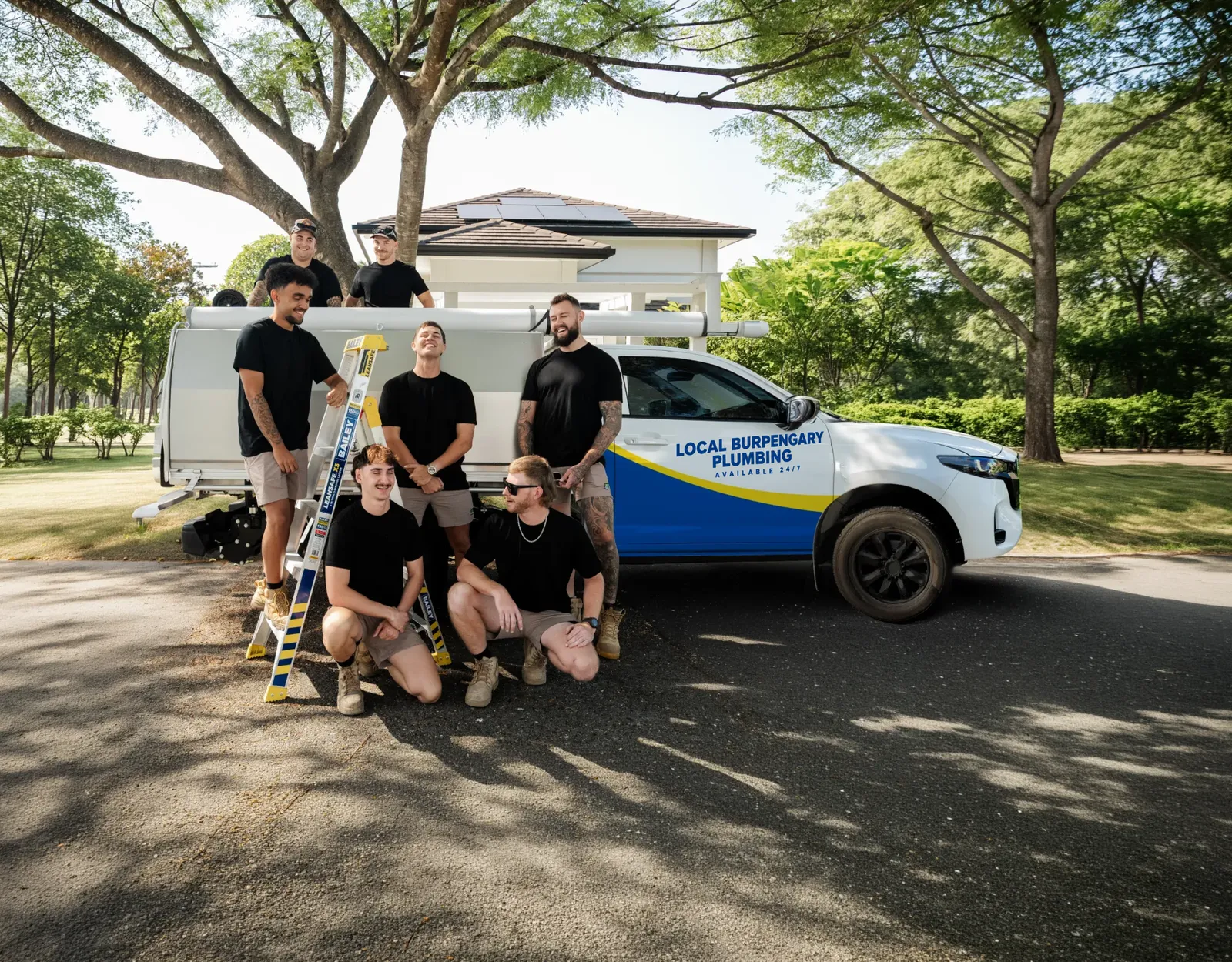
We run those connections across Burpengary and the suburbs around it, from the rural-residential blocks out Hawthorn Road way to the tighter estates near the rail line. Rainfall here averages 1,181 millimetres a year, with the wet months running from summer into autumn. That is a lot of water going past a roof if nothing catches it.

How a Tank Is Plumbed Into the House
Rain runs off the roof, past a first flush diverter that catches the dirty first wash, then through a screened inlet and into the tank. An outlet pipe then carries tank water to the cisterns, the laundry cold tap and any garden taps. That connection is a job for a licensed plumber, because Queensland law puts any work on a tank feeding the house in the licensed basket.
A few parts do the heavy lifting:
- the diverter, which dumps the first flow and its grit before it reaches the stored water
- the inlet screen, which has to be mosquito-proof
- the outlet pipe and its valve, which the plumber ties into the house lines
- the overflow, which also needs a screen or flap valve
Every opening on a new tank counts, overflows included, and each one has to stop mosquitoes getting in. Use stainless steel, brass, copper or aluminium gauze with mesh no coarser than 1 mm, fitted so it does not speed up corrosion.

What Tank Water Can Be Used For
Tank water suits three jobs: flushing toilets, feeding the cold laundry tap, and watering the garden and lawns. Those jobs pose a low disease risk, so no further treatment is needed for them.
Drinking is different. Mains water is the safest, most reliable choice for drinking, hygiene and food prep, so tank water is a step only for properties the town supply doesn't reach. This suburb is on town water, so the kitchen sink and the bathroom basin stay on the mains.
If you want better water at the kitchen tap, that is a separate job: the water filter installation page walks through it.
Council Rules for Tanks in Burpengary
The council controls tanks here through building and plumbing approvals, so ring them before ordering anything. Moreton Bay's council also limits where a tank can go on the block, and some areas require a set distance off the side boundary.
Other requirements that may apply include the mosquito-proof screens, the stormwater connections, and fitting a first flush diverter. Sort the position and the paperwork before the delivery truck arrives, because moving a full tank is nobody's idea of fun.
One more point worth knowing: if the tank tops up from town water, check the solenoid and internal parts for faults. Unitywater's concealed leak adjustments don't cover water a faulty top-up wastes into a tank, so a silent fault costs you twice.
Keeping a Tank Mosquito-Proof and Clean
The upkeep runs on three clocks: the first flush device every 3 months, roof debris, animal access, screens and flap valves every 6 months, and the sediment every 2 to 3 years. An owner can be fined up to 3 penalty units on the spot for a tank that mosquitoes can get into, so the checks are worth the ladder climb.
The six-monthly round in full:
- go over the tank itself, each mosquito screen and every flap valve, and fix any tear straight away
- clear leaf and plant build-up from the roof and cut back branches that hang over it
- look for signs of entry by animals, birds or insects, and seal the gaps
For the sediment, look inside on the two-to-three-year mark. If sludge has covered the bottom, siphon it away or pump the tank out and start fresh. Also open and clean the first flush devices after rain, since a clogged diverter sends everything it caught straight back over the top.
Why Tanks Suit the Big Blocks Here
Burpengary grew around rural-residential lots that still cover much of its 22 square kilometres, and a big roof on a big block catches a serious volume of water. The trade-off is the ground: creek-flat lots hold shallow, wet subsoil through the wet season, which loads tank pads and makes any dig around buried lines slow work.
The unsewered streets add their own angle. When wet-season rain soaks the absorption trenches, septic tanks on those blocks can push effluent into yards, and a tank flushing toilets with roof water eases some of the load going into the system. We plan the connection with that in mind, and water pipe repairs handles the supply side of the same blocks.
The pump side is its own job. If the tank needs pressure to reach the fixtures, the water tank pumps page sets out that side.
How We Connect Your Tank
- 1

Tell us what's happening
Call (07) 3524 7137 or send the form with a few details about the problem in Burpengary. A clear description helps us bring the right parts.
- 2

We map the run on site
We look at where the tank stands, which fixtures it will feed, and how the pipe reaches the cisterns and the laundry. Anything the council rules affect gets flagged before we quote.
- 3

Approve a fixed price
You get a fixed quote before any work starts, with flat-rate pricing and no hidden fees. Nothing goes ahead until you say yes.
- 4
Pay when it's finished
Pay by card or EFTPOS on site once the job's done, or ask about Fix now, pay later.
Plumbing job in Burpengary?
$0 call-out fees, available 24/7, and same-day where we can.
Rainwater Tank Questions From Burpengary
Call (07) 3524 7137Do I need council approval for a rainwater tank in Burpengary?
Yes, approvals are usually involved. Moreton Bay's council regulates tanks under building and plumbing approvals, and it limits where a tank can go. Some areas require a set distance off the side boundary, so call the council before you buy anything.
What can I use rainwater from a tank for?
Toilets, the washing machine's cold inlet, and the garden and lawns. Those uses carry a low disease risk, so the water needs no extra treatment for them. Keep drinking and cooking on the mains, because Unitywater's town supply is the safer source.
What is a first flush diverter and does my tank need one?
A first flush diverter catches the first wash of water off the roof, keeping leaves and grit out of the tank. Moreton Bay requirements may include fitting one, so yes, plan on having one installed.
How often does a rainwater tank need checking?
Upkeep follows three schedules. Inspect the first flush device every 3 months, check roof debris, animal access, screens and flap valves every 6 months, and look for sludge every two to three years.
How do I deal with sludge at the bottom of my tank?
Check the tank interior on that same two-to-three-year schedule. If sludge has built up over the floor, siphon it away or pump the tank out and start fresh. The checking is yours as the owner; we handle the plumbing side, not the cleaning.

Call Us About the New TankWe'll call you back.
Call (07) 3524 7137 to book a plumber in Burpengary. We're available 24/7, with $0 call-out fees, flat-rate pricing and same-day where we can.
To claim your $0 call-out fee, call (07) 3524 7137 today.